Applications · Example application
ITSM Console
Incident, Problem, Change & Service Request management
About this example
ITSM Console: an example of what's possible on the Kinetic Platform
ITSM Console is one of 48+ working applications in Kinetic AI Labs — a portfolio of example apps built on the Kinetic Platform to show how quickly real, production-grade software can be assembled when the platform handles workflow execution, data, identity, and integrations. These applications are not commercial products. They are reference implementations: live demonstrations of applications use cases that customers and partners can study, fork, or use as starting points for their own builds.
What this application does
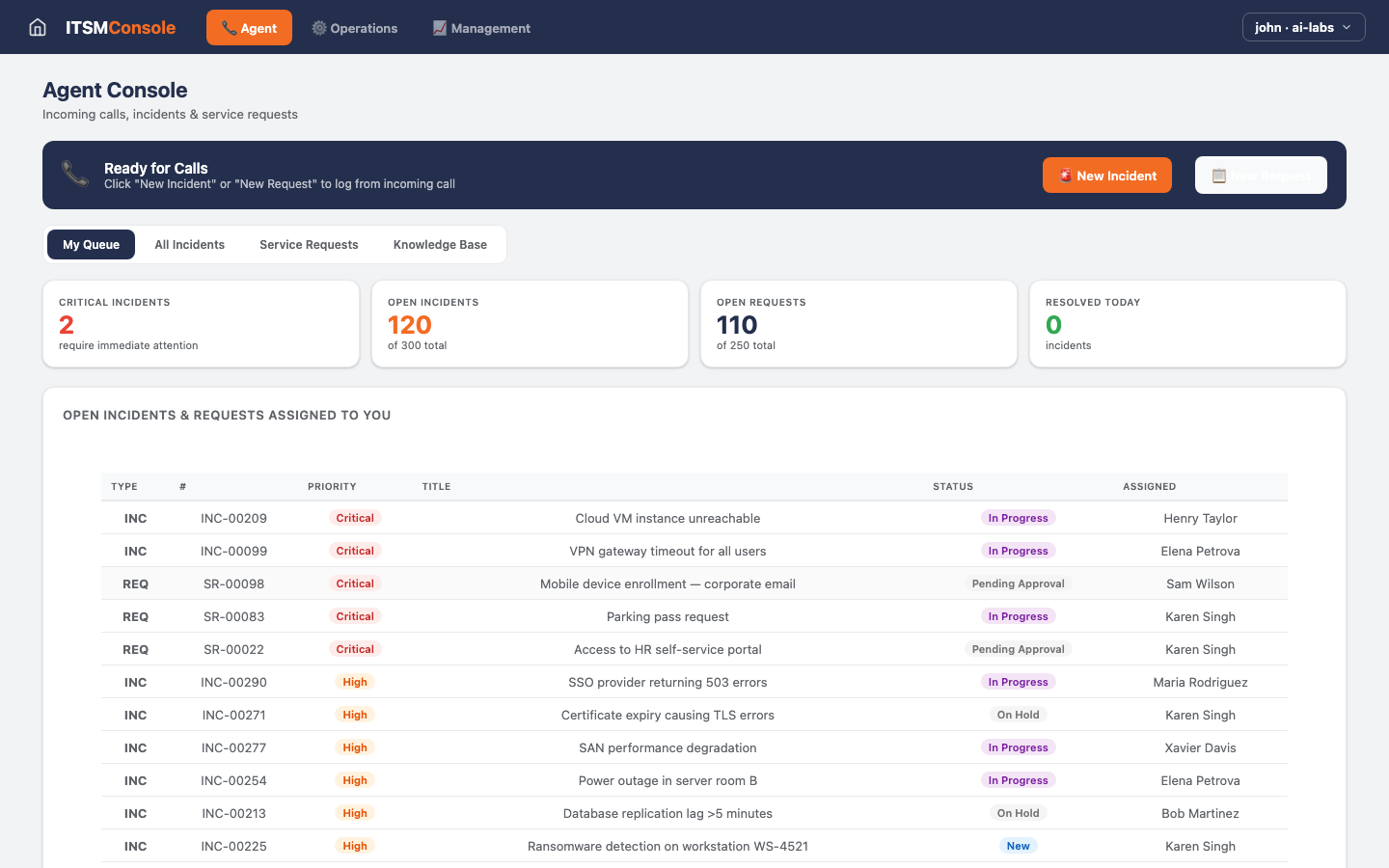
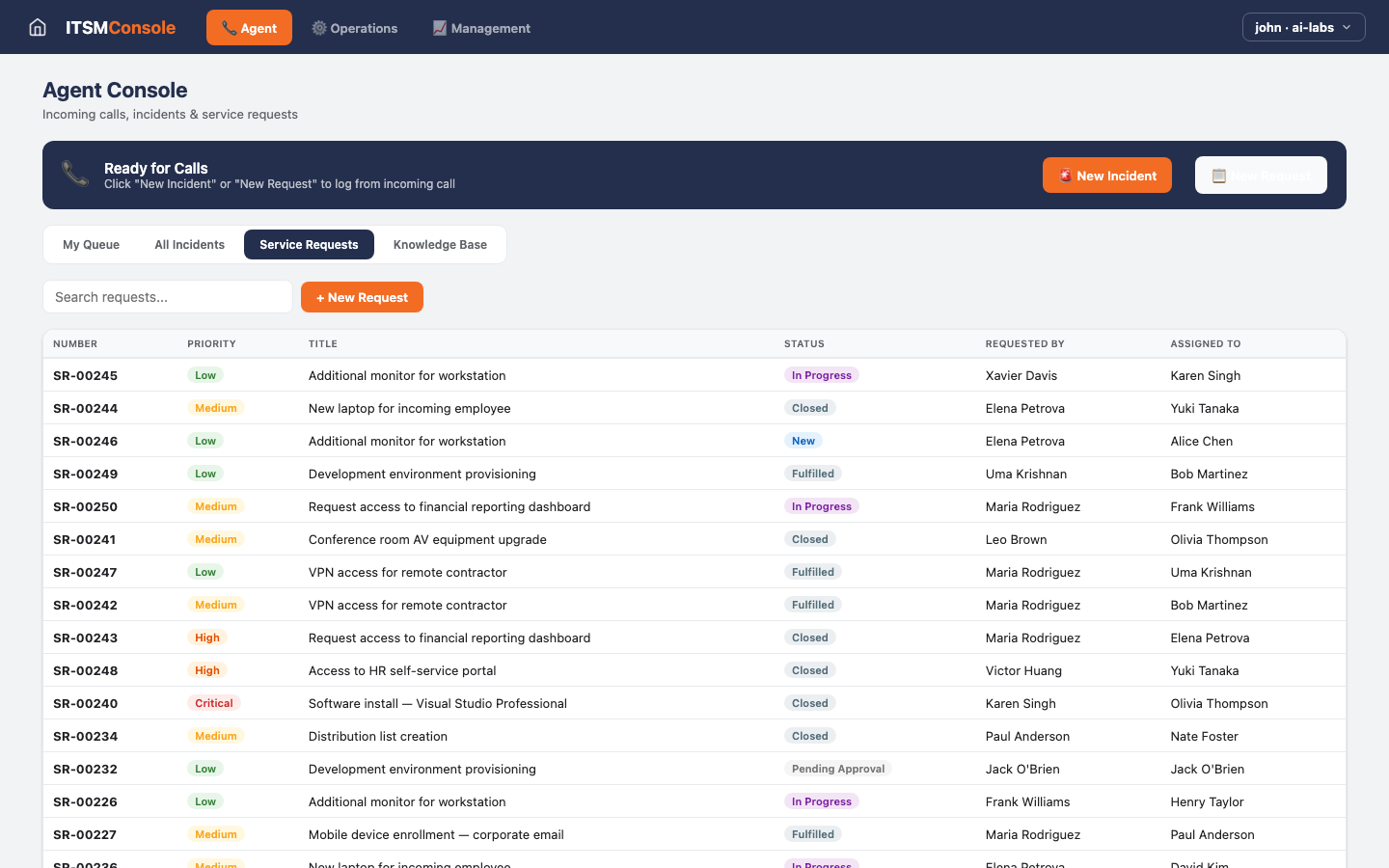
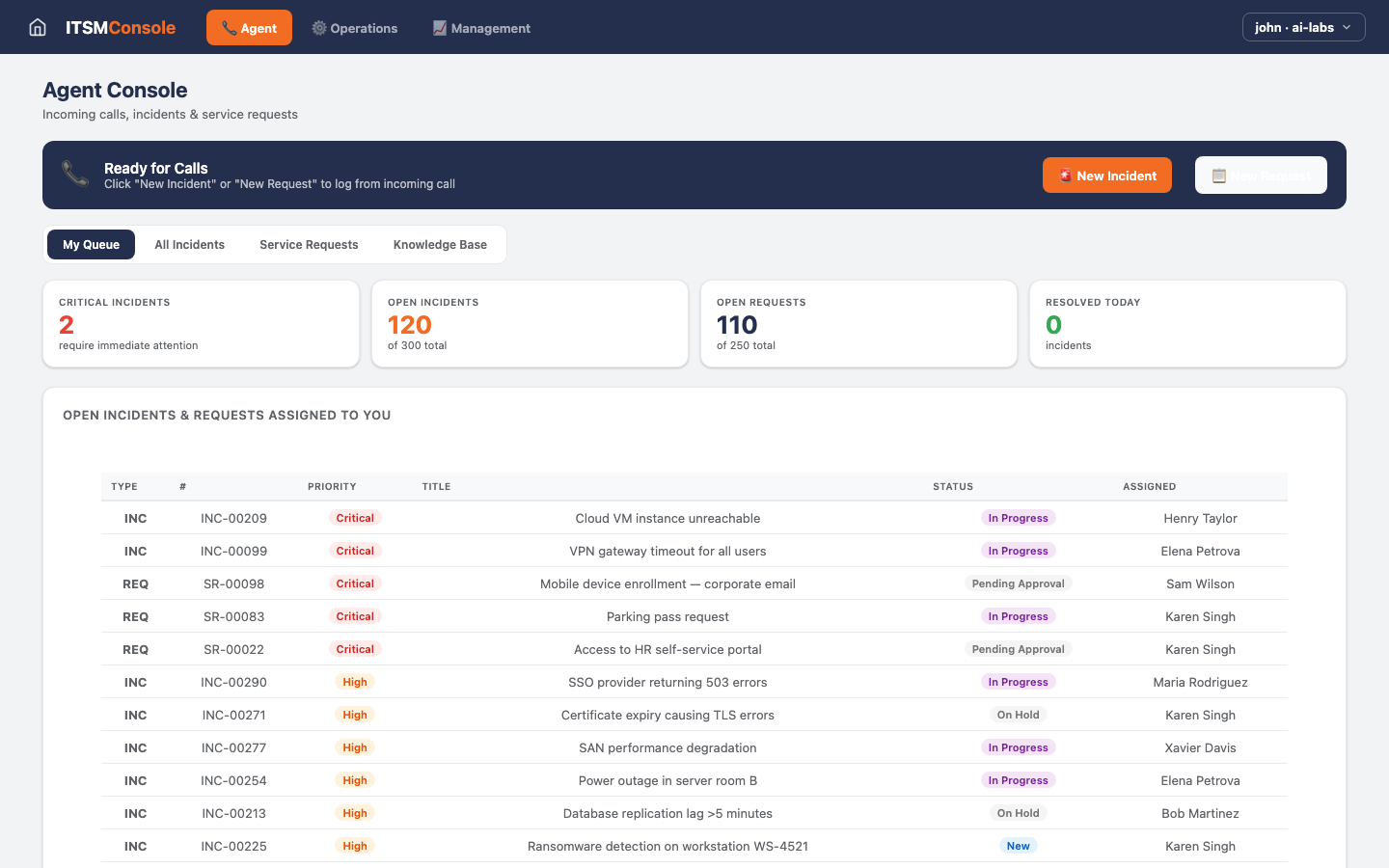
A unified IT service management console with three role-based views: Agent Console for front-line incident and request handling, Operations Console for change management with Kanban boards and schedule timelines, and Management Console for reporting and analytics. Dashboard cards show critical incidents, open counts, and resolution rates at a glance. The Agent view displays incoming calls, incidents, and service requests in a prioritized queue with status badges and assignment tracking.
Application modules
Key capabilities
What ITSM Console demonstrates about building on the Kinetic Platform.
Agent Console
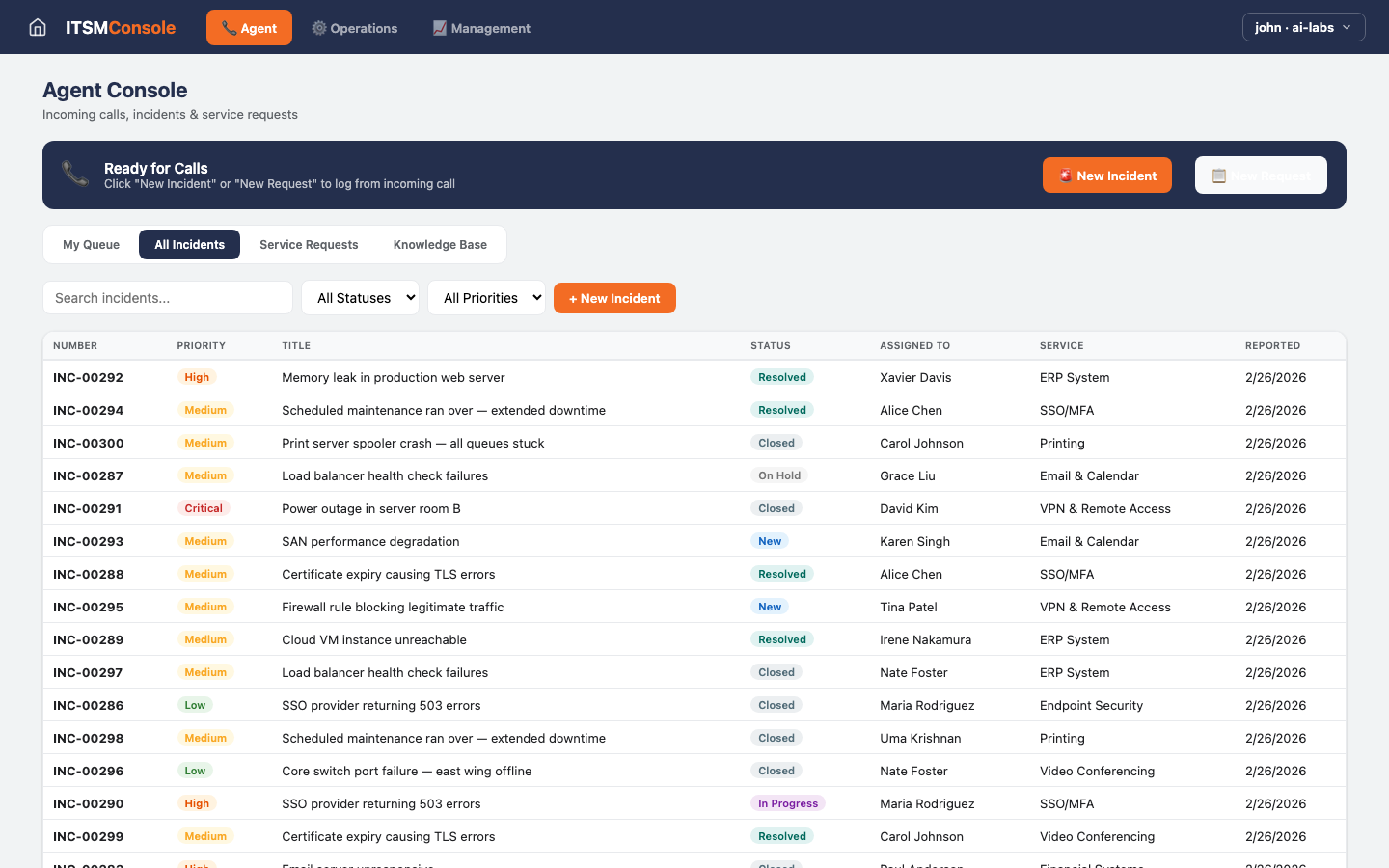
Unified queue for incidents and service requests with priority routing, status tracking, and one-click incident creation from incoming calls.
Operations Console
Change management with Kanban board visualization, schedule timelines, pending approval tracking, and impact analysis views.
Management Console
Analytics dashboards with incident volume trends, SLA compliance, team workload distribution, and resolution time tracking.
Knowledge Base
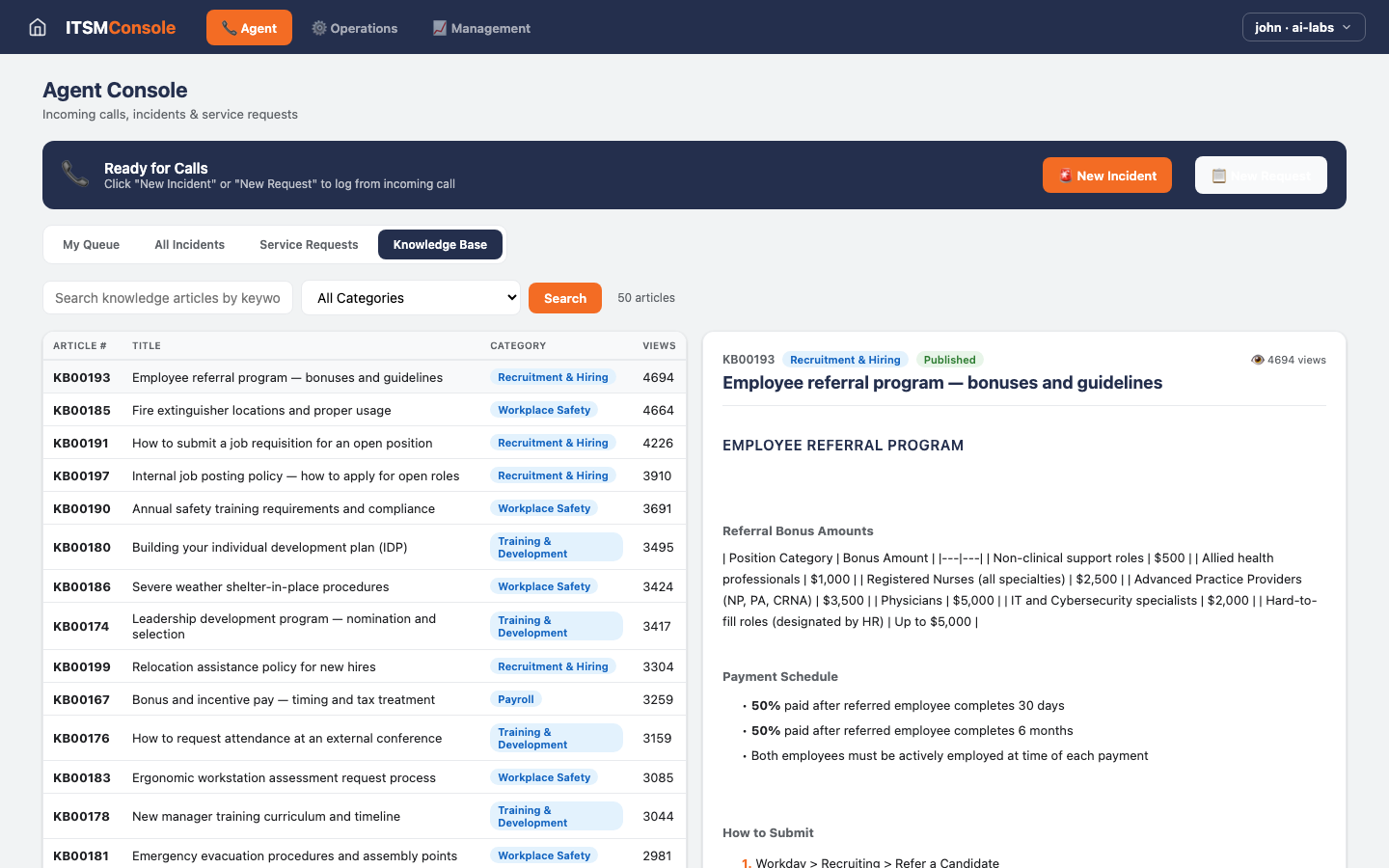
Integrated knowledge articles searchable from the agent console for faster resolution and consistent answers.
Screenshots
See ITSM Console in action
These screenshots are captured directly from the live AI Labs instance — every screen below renders against real workflows and data running on the Kinetic Platform.
Dashboard
Agent All Incidents
Agent Knowledge Base
Agent My Queue
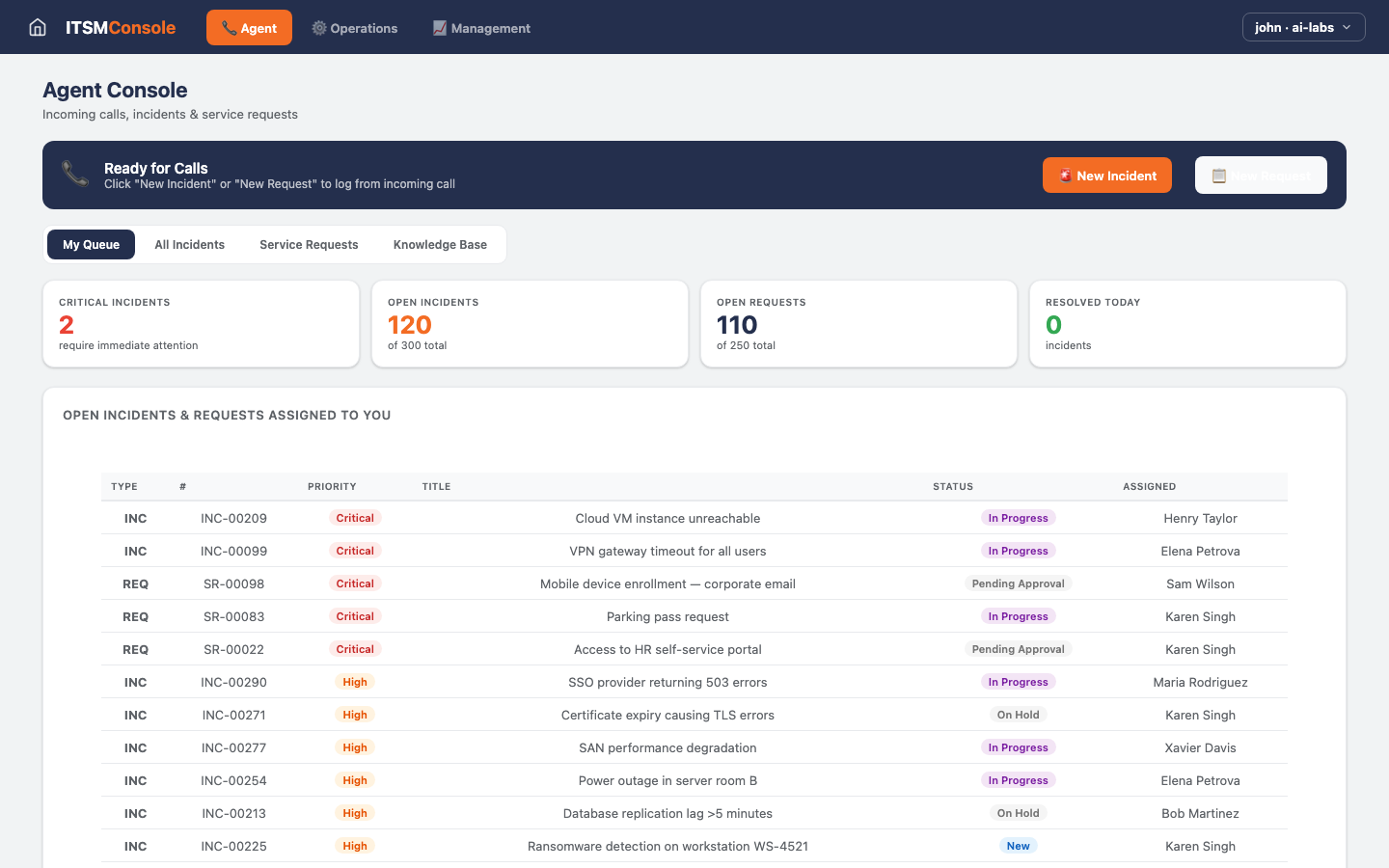
Agent Service Requests
Agent
What this example demonstrates
Why ITSM Console matters as a reference implementation
ITSM Console shows how a applications application can be built on a workflow orchestration layer instead of a custom-coded stack. The screens you see above are not mockups — they are full Kinetic forms, tables, dashboards, and views, wired into deterministic workflows that run the underlying business logic.
Because every example in AI Labs runs on the same Kinetic Platform instance, they share one workflow engine, one identity model, one integration layer, and one audit trail. That means the patterns proven in ITSM Console — agent console, operations console, and the rest of its capabilities — transfer directly into customer environments without re-platforming.
Built on Kinetic
Same platform, every application
ITSM Console runs on the same Kinetic Platform instance as every other AI Labs example. Same workflow engine. Same security model. Same integration layer. ITSM Console is a working illustration of how quickly a production-ready application can be built when the platform handles the hard parts — workflow execution, data management, role-based access, and audit trails.
Want to see ITSM Console live?
Schedule a demo and we'll walk through ITSM Console on the Kinetic Platform — or talk about adapting it (or building a new one) for your environment.